
Reworked Melee Combat System Deep Dive
2026.07.06
In this blog we’re introducing the new melee system we’re releasing with Season 11. We’ll explain how it works, what we’ve changed, and what we’re hoping to achieve with these changes.
Let’s dive into this rework with Design Director on THE FINALS, Matt Lowe!
Approach
As we’ve said previously, we feel melee has two core problems we’d like to solve: We want to make melee a more viable style of play with a fairer chance to win matches and we want to ensure melee is not frustrating for those who die to it, which has been a common point of frustration.
To achieve this, we’ve approached the re-work in four distinct ways:
We’ve slightly increased the potential power level of each melee weapon, making it possible to have more impact in fights than before.
We’ve introduced new mechanics that aim to gate that power behind player skill. If the player manages to track their target well and land accurate hits they are able to deal more damage, whereas if they are imprecise, they will deal less damage.
We’ve rebalanced and added additional functionality to some of the bespoke secondary functions on some of the melee weapons, such as the Riot Shield and Dual Blades, to give those weapons more control or more distinct styles of play.
We’ve introduced some counter-play for players when facing melee users, as another way to gate melee’s increase in potential power.
Let’s talk about each of these in more detail.
Increased Power Potential
To increase the chances that melee users can compete in matches and have a chance to win tournaments, we needed to increase the potential power of melee weapons. For gun users in THE FINALS, winning two versus one fights or even three versus one fights is something that can be achieved from time to time, but for melee users they frequently face scenarios where they can get one elimination before being eliminated by another player, essentially ‘trading’ kills, because frequently they don’t have the time to close from one target to the next.
We wanted to change this, not to make two versus one fights easy, but to increase the chances that a good melee player, playing well, has a greater chance to occasionally win out in these scenarios. To get melee to a power level where this might be possible, we’ve changed a number of things.
First, we’ve done a full balance pass on all the weapons, increasing damage, modifying swing speeds and adjusting ranges. This has increased the potential power of the majority of melee weapons
Second, all melee weapons can now lunge towards an enemy when making an attack and the size of the lunges has been extended. Previously when making a regular attack, if an enemy target was in range, the game would lunge you up to around 3m towards that target to help you land the hit.
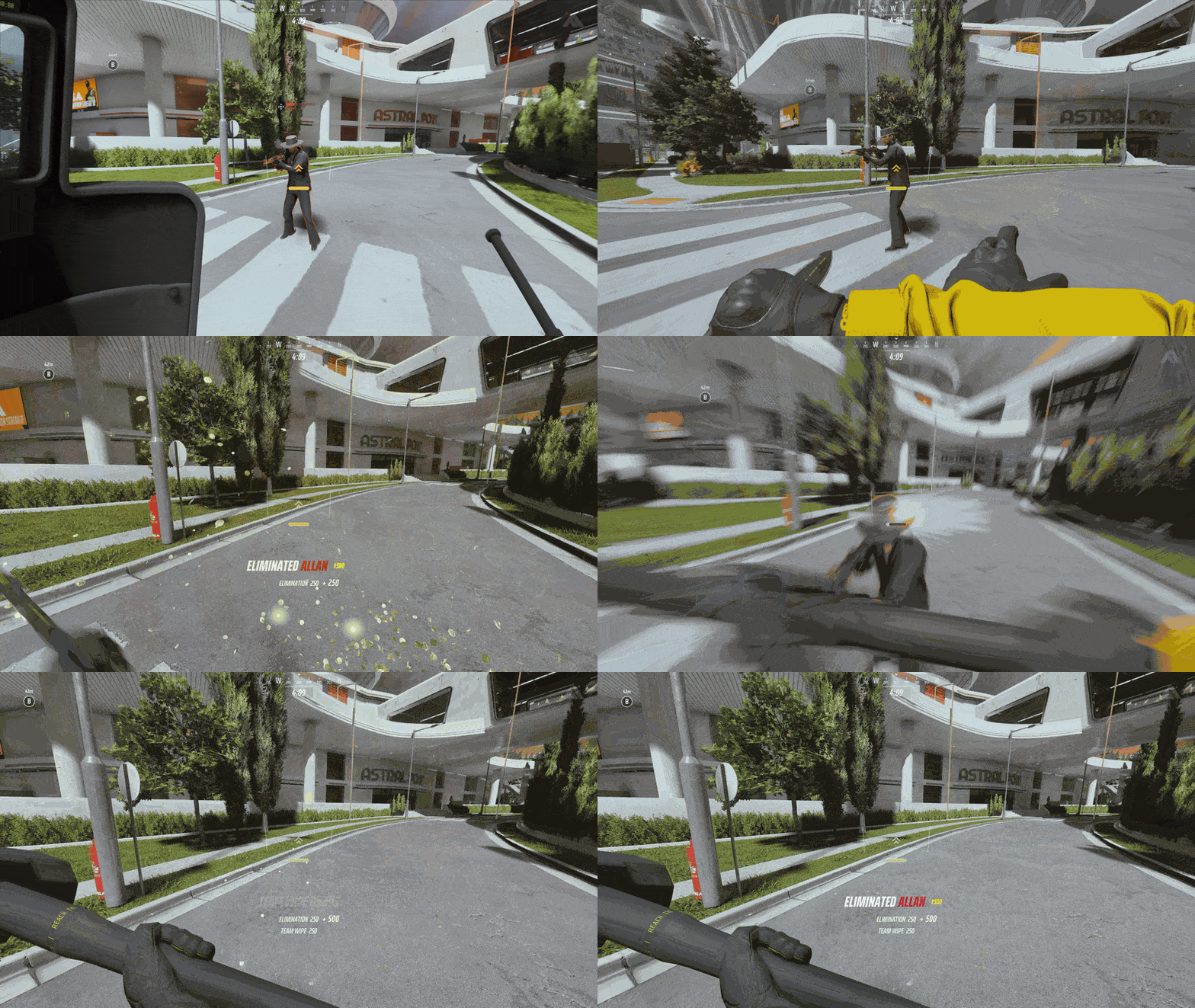
This lunge now averages around 4.5m but varies from weapon to weapon, and this extra range makes it much easier to get to a second target or follow-up on a more mobile enemy.
To help players understand if they are in range to lunge, we’ve added a lunge indicator to the crosshair for melee weapons. This indicator lights up yellow when you can lunge at the target, or red when an attack is in progress.
When it comes to power potential, the third thing we’ve reworked is many of the attack sequences of primary attacks. We’ve made them more responsive, adjusting attack angles, modifying attack ranges, etc. For example, the Dual Blades primary attack is no longer a three-attack sequence but instead a two-attack sequence but with a new type of attack added to the weapon. This makes it more responsive to use, while also giving the melee player more choice over how to attack.
Some of these attack sequence changes are buffs, some are small nerfs or adjustments to account for the new functionality in the system.
Given all those power increases to melee, we feel melee’s potential is much better now than it used to be and hopefully players agree!
But this only addresses the power element of melee. What about the frustration melee victims experience? And how are we ensuring this extra power is only accessed through skilled play? For those questions, we need to talk about two new mechanics: stamina and precision.
Control and Skill Expression
To offset some of this increased power and reduce the frustration of being on the receiving end of melee attacks, we’ve introduced two new systems: ‘Stamina’ and ‘Precision’ that make melee combat more skill-driven.
We know Stamina systems are a concerning idea for a lot of our melee players as they feel these types of mechanics are often very frustrating in other games, but I want to stress that what Stamina does in THE FINALS is quite different. Being out of Stamina does not reduce damage, does not reduce movement speeds and does not slow attacks, instead it acts more as a kind of ‘combo throttle.’
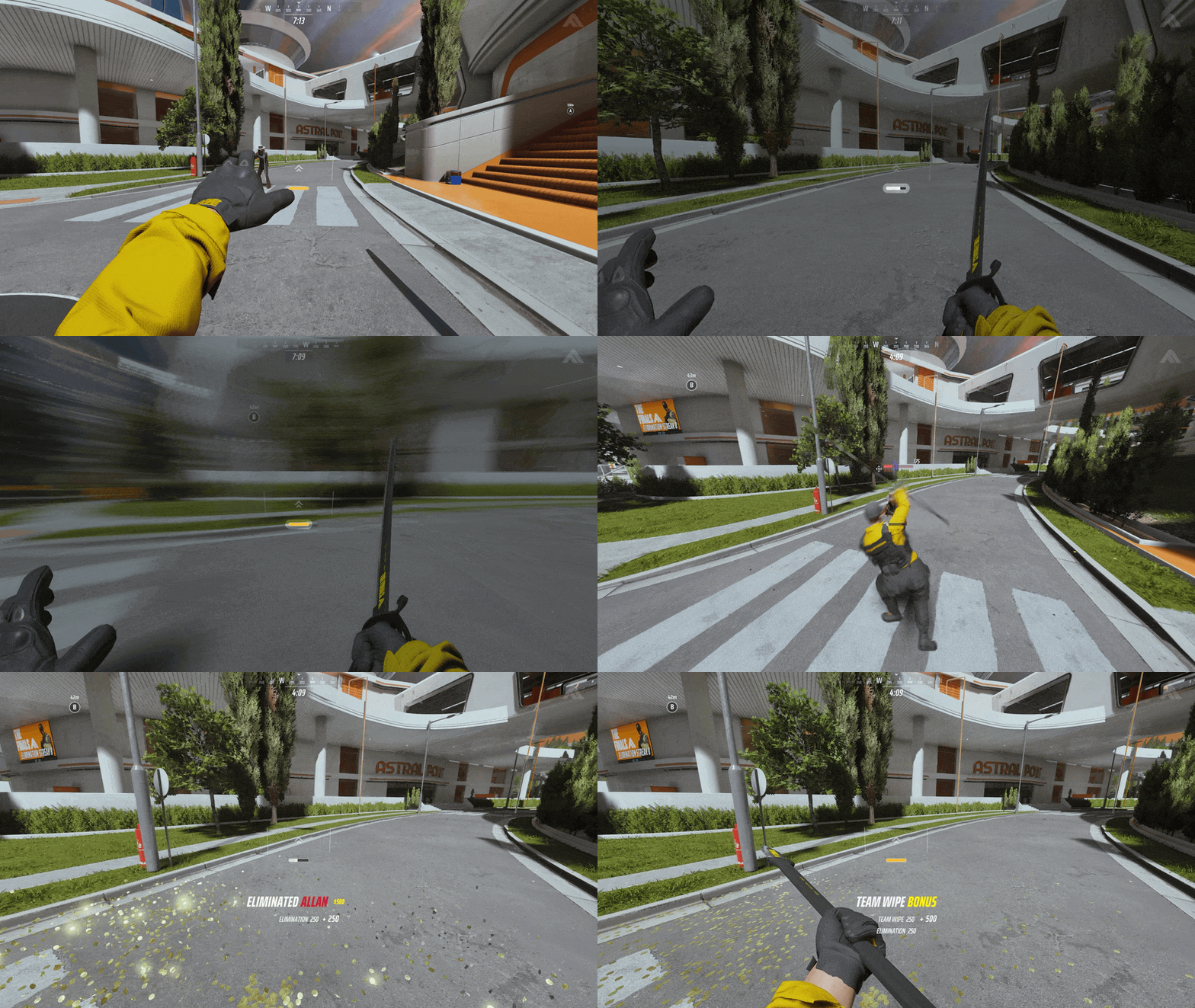
Our new Stamina system controls when the melee player has access to lunges and when they don’t.
Whenever the player performs an attack and lunges, their stamina bar is consumed. While out of stamina, players can still attack, run, do the same damage as normal and so on, but they will not have lunges to help them reach the target and stamina will gradually regenerate over a short period of time (around two seconds). However, whenever the player lands a precise hit with their melee weapon (more on that in a second), their stamina will immediately refill. A Stamina bar showing the player their current stamina is part of the new melee weapon specific crosshair we’re adding in Season 11.
This new system punishes melee users that rush their attacks and frequently miss the target, but rewards those that effectively chain hits together by giving them constant access to Stamina. If a player wants to maximize their damage output as a melee user, and retain access to lunges to perhaps help reach a second target, they’ll need to manage their Stamina and keep scoring Precise hits. And that brings me on to our second new system that we’ve added to melee combat, ‘Precision’.
Precision introduces more aim skill to melee. Previously, any part of a hit sweep with a melee weapon would cause the same amount of damage to the enemy, but with Precision different parts of the sweep do different amounts of damage. The ‘precision zone’ at the center of a sweep will cause precise hits that do the maximum amount of damage, with many melee weapons receiving a damage buff compared to Season 10. Any hits made by a sweep that areoutsidethe precision zone are considered glancing blows and do less damage (with these damage values generally being below the damage values the weapons did in Season 10 and prior). To help make it clear to players which hits are in or out of the precision zone, the new melee weapon crosshair shows two vertical lines that communicate the size of the weapon’s precision zone making it easier to see.
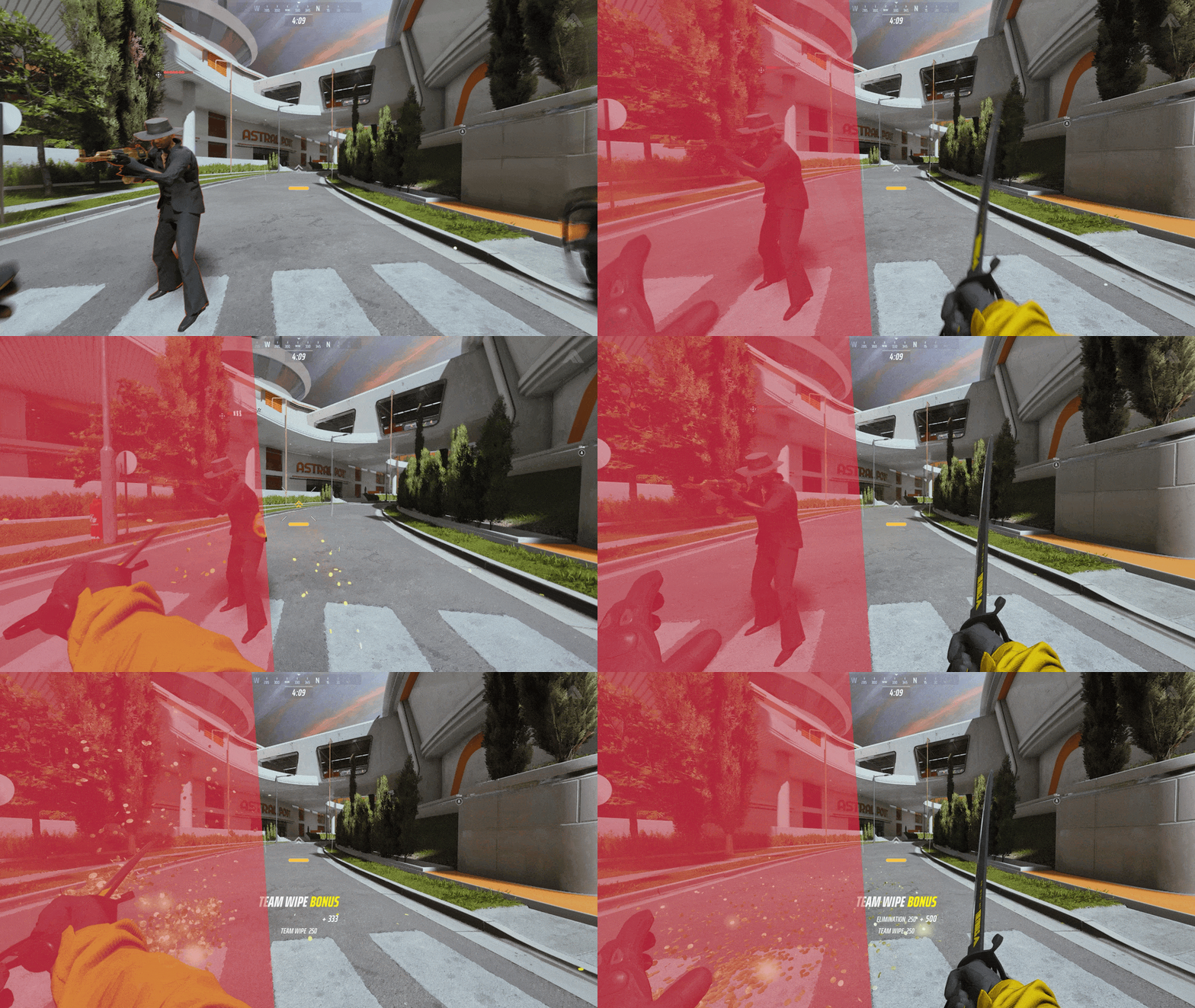
With Precision, if a player wants to access the extra power levels added to melee with Season 11, they can’t just spam attacks, they need to be aiming for precise hits.
The buffs to damage, lunges and attacks mentioned above increase the overall power potential of melee weapons and better reward melee players for getting close to their targets. But with Precision and Stamina, melee players are now required to be more deliberate in their actions to access that potential. We feel this mix creates the right balance between increasing melee weapons’ power potential, while reducing some of the frustrations many players express when facing melee. These systems, along with the changes to lunging, also give us many more additional parameters with which to balance melee combat going forwards, allowing us a greater degree of control to make the weapons feel impactful but fair.
But we’re not done, there are a few more changes to discuss.
Secondary Functions
To make some melee weapons more viable or more engaging to use it wasn’t enough to just re-work the melee system, we felt we also needed to take a look at and refine some of their secondary functions to try and make the weapons and their playstyles stand out a little more. Here’s a quick breakdown of some of those main improvements:
Riot Shield: The Riot Shield has had its collision updated to make it slightly larger and more reliable, as well as more accurate, making it much more effective at blocking bullets now and truly opening up a ‘turtle’ style of play. It can also now block damage from incoming melee attacks.
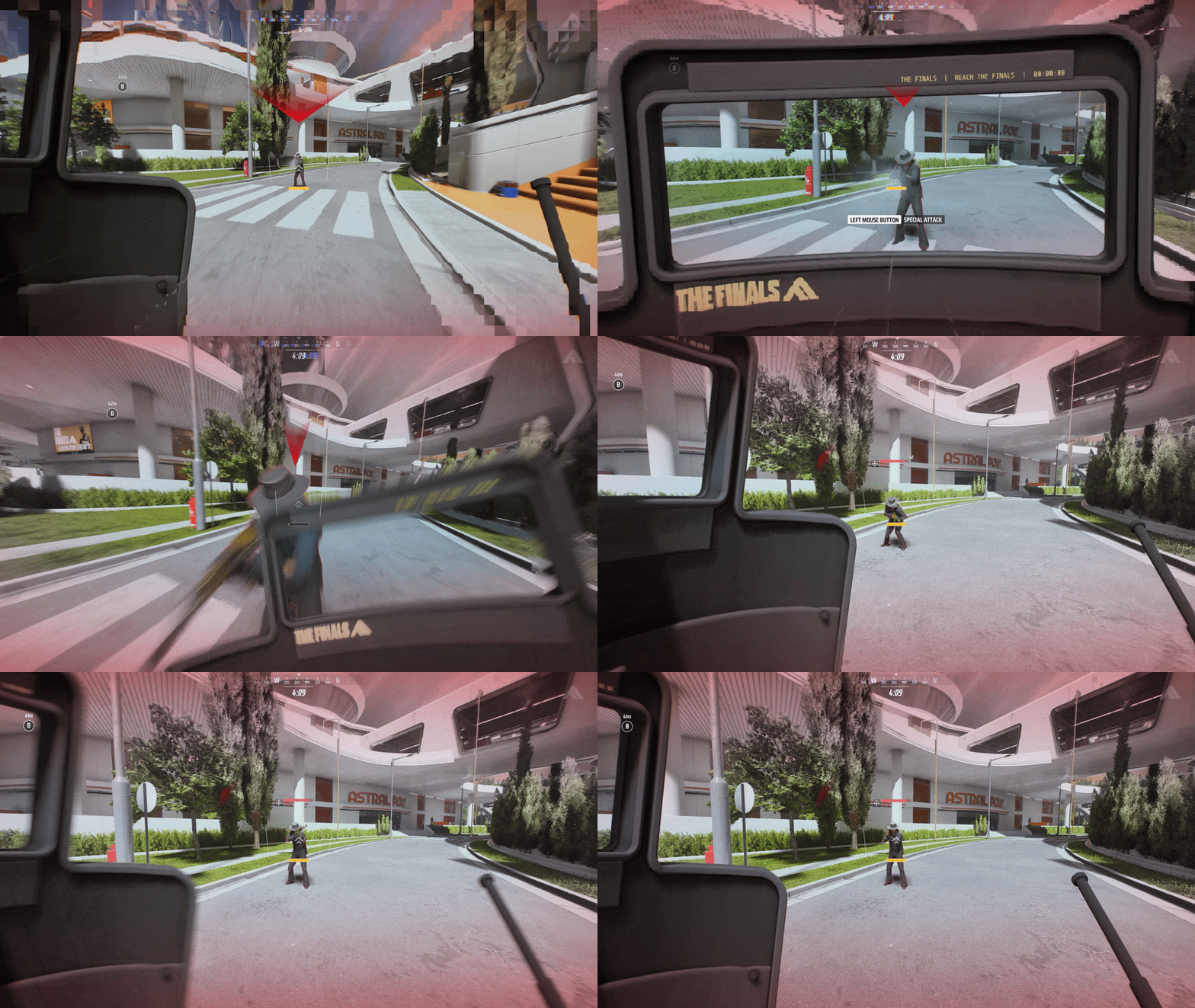
We’ve also added a Shield Bash attack to the Riot Shield, which can be used to knockback nearby enemies. This attack is triggered by pressing the attack button while the Shield is raised.
To offset the increase in defensive power and control, the Riot Shield damage has been slightly reduced to compensate and their movement speed when the Shield is raised has been slightly slowed. These changes create a very new feel to Riot Shield play which is much closer to the intent we initially had for the weapon
Dual Blades: The Dual Blade’s third attack in its primary attack sequence has now been removed because we wanted to make the power of that attack more accessible and not have it always locked behind a long hit combo. Now, if a Dual Blades player presses the attack button while their Blades are raised for blocking, they will lunge forwards a short distance and perform that cross attack, giving the player a bit more flexibility and choice in which attack they use and when
Spear: The Spear’s spinning secondary attack has been made more responsive but also requires slightly more skill to use now. When the attack is triggered it will consume Stamina and perform a single spin attack, making the attacker faster and committing the player to spinning for less time. If during that first spin the player hits an enemy then their Stamina will immediately refill and either holding down the attack button or hitting it a second time will now allow a second spin to immediately trigger, consuming stamina again. This loop of spin, hit, regain stamina, spin again can be performed up to three times if the player wants to, or at any point they can break out of the attack after the last spin concludes, making the weapon more responsive overall.
Sword: The Light’s sword has had some of its prior rotational constraints removed or reduced on its secondary Lunge attack, as we now have more ways in which to balance its power.
These changes help to make each melee weapon and their style of play a bit more unique and individual, which we believe adds more fun choices to the game for players when it comes to Loadouts.
Melee Counter-Play
The last change we’ve made to the melee system for Season 11 is one aimed at further reducing the frustration non-melee players often feel when a melee player gets on top of them. In those scenarios, players feel like they can’t easily locate the enemy or have no way to easily disengage from the fight and this is a fair complaint. Melee players should win the majority of the time when up against a gun user at close range, but allowing the gun user at least some chance to perform a well executed counter and create space would create an engagement rather than a foregone conclusion.
To try and address this we’ve updated how Quick Melee works, to make it a more integral part of the melee system. Quick Melee has had its damage reduced slightly and has had Stamina added to it. In this case, Stamina does not control the lunge component but instead grants Quick Melee access to a kick attack that can be used to push nearby enemies away from the player. This knockback only occurs if the player has Stamina when performing a Quick Melee attack though and that Stamina is always consumed on use and is not regenerated by scoring a hit. Any Quick Melee attack performed without a target or without Stamina will be the traditional swing of the elbow.
This new type of Quick Melee attack provides players with an option to counter melee attackers when they get too close, as well as offering potential counters to items like the Winch Claw. At the same time, we’ve taken the opportunity to reduce Quick Melee’s damage as a broader balancing measure to reduce the number of ‘attack plus Quick Melee’ combos that can make balancing a weapon breakpoints more restrictive for us as a design team. Not having to account so heavily for a burst of 40 damage (almost a third of a Light’s health) will give us greater control over the balancing of some more ‘spiky’ weapons.
Conclusion
Together, we think this range of changes should push melee to a place where it’s a more viable way to play THE FINALS, while at the same time reducing frustration for many players who face melee. The potential power from melee weapons has increased, but to access that power it requires the melee user to manage Stamina and chain Precise hits, while having to avoid being kicked away from their target. This should give a higher ceiling to melee weapons while also adding more of a skill element to their usage, which we think strikes a good balance.
We’re excited for you to get your hands on this new melee system and look forward to your feedback on it!
